When I purchased the new Macbook Pro last year, one big issue was the lack of widely used interface ports. In order not to purchase many dongles (and spend too much on the Apple Store) I had a look on the usual sites and found a nice one from Cable Matters (no, sadly I have no sponsorship from them) which had them all: ethernet, USB-A, VGA and HDMI. Fantastic!
- Usb 2 0 Ethernet Adapter Driver Mac Os Sierra 7
- Usb 2 0 Ethernet Adapter Driver Mac Os Sierra Download
- Usb 2 0 Ethernet Adapter Driver Mac Os Sierra Free
- Usb 2 0 Ethernet Adapter Driver Mac Os Sierra Update
- Usb 2.0 Ethernet Adapter Driver Mac Os Sierra
Usb 2 0 Ethernet Adapter Driver Mac Os Sierra 7
Coming from Linux, where 99% of the drivers are already provided in the kernel, the first odd thing I had to do is install the drivers for these ports! Even if I manage Windows computers daily, I wasn’t used anymore on my laptop!
USB 3.0 to Gigabit Ethernet Driver (OS X 10.7.5 - 10.12.6 only). USB 2.0 Stick Adapter & Cradle Drivers (2012) for Windows. Mac Pro, MagSafe, PowerBook, OS X. Question: Q: usb 2.0 to ethernet adapter not working on Sierra My ethernet port fried due to a thunderstorm power surge so purchased adapter. It came with asix drivers AX88772B and A which would not load, probably not for Mac OSX Sierra so searched forums and downloaded and installed Asix latest drivers 88179 for USB3.0 to Ethernet. How to Setup USB 2.0 Ethernet Adapter Driver install Windows 7/8/8.1/10RD9700 Driver Download Link-https://www.driverscape.com/download/rd9700-usb2.0-to-fast.
Usb 2 0 Ethernet Adapter Driver Mac Os Sierra Download
Luckily drivers are not hard to find:
- USB-A port uses ASM1153 chipset (55aa:174c), but works out of the box
- Ethernet uses AX88179 from Asix (1790:0b95)
When I first installed the drivers I was using Sierra, and no problems arise. Now that I reinstalled with High Sierra the ethernet driver wasn’t working. Why? User-Approved Kernel Extension Loading.
User-Approved Kernel Extension Loading is a feature (released broken) which should enhance system security, from preventing unknown sources extensions from loading into the kernel.
So when I was prompted to load a kernel extension from developer WEI LU SU I instantly said NO. Just later I found out that it’s the extension which manages the USB Ethernet AX88179!
So if, like me, you missed or misinterpreted that prompt you can go to System Preferences > Security & Privacy > General in the window bottom you can see System software from developer “WEI LU SU” was blocked from loading. Right next to it a button will allow you to Allow the extension from loading, and the USB Ethernet port should work right after.
Usb 2 0 Ethernet Adapter Driver Mac Os Sierra Free
Topics Map > Networks & Connectivity > Campus NetworkTopics Map > Networks & Connectivity > ResNet
This document describes how to find the MAC of an Ethernet Adapter. Ethernet Adapters are used to get a wired connection for laptops that lack Ethernet ports and typically utilize a USB connection (Windows or Mac OS X) or Thunderbolt connection (Mac OS X only).
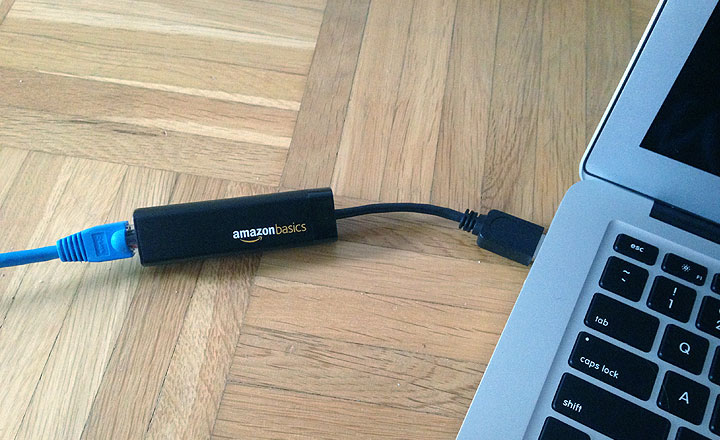
If a laptop is connected to the campus network in a Housing location via an Ethernet adapter, you will need to register the MAC address of the adapter. The laptop will have its own MAC for wireless connections, but will use the MAC of the adapter for all wired connections. Follow the instructions below to find the MAC address for an Ethernet Adapter used with your Windows or Mac OS X laptop.
Usb 2 0 Ethernet Adapter Driver Mac Os Sierra Update
Windows
With an Ethernet cable plugged into your data jack, connect your Ethernet adapter to the other end of the cable, then plug the Ethernet adapter into one of the laptop's USB ports.
Open your Windows start menu, then type cmd in the search bar and press Enter to open Command Prompt.
In Command Prompt, type
ipconfig /all.Information for the Ethernet Adapter will be found under the heading Ethernet adapter. The Physical Address corresponds to the MAC address. This is the address that will need to be registered for housing network connections.
Usb 2.0 Ethernet Adapter Driver Mac Os Sierra
Mac OS X
With an Ethernet cable plugged into your data jack, connect your Ethernet adapter to the other end of the cable, then plug the Ethernet adapter into one of the laptop's USB or Thunderbolt ports, depending on which type of adapter you are using.
In your Mac's menu bar, click on the magnifying glass icon to open a Spotlight search. Begin typing Network Utility until it auto-completes, then press Enter or click on the application name to open it.
Under the Info tab, select the applicable network interface from the dropdown menu. The Hardware Address listed is the MAC address of your adapter. This is the address that will need to be registered for housing network connections.
- Note: The name of the network interface will depend on what type of adapter you are using, but should contain the word 'Ethernet'; for example, a Thunderbolt adapter may be listed under the name 'Thunderbolt Ethernet'. If you have more than two interfaces listed for Ethernet and are unsure which is the correct one, look for the entry that has the Link Status set to Active (excluding the 'WiFi' interface.)